
Kapo Whakaahua
Presence. Connection. Observation..
Someone asked me one day, if they could shadow me when I’m photographing rākau. I was a little taken back by this request, although I was grateful that someone values my process and what I create. And I reflected on the fact that this ability to “see” a photograph and capture the essence of what is in front of me, has come from many years of photographing! And no amount of shadowing would teach the other person, but perhaps it could be a beginning and give insight into my world.
Being present when in the ngahere (forest) or in the garden, tuning in, and connecting has always been my starting point.
I’ve also been asked - what camera do you suggest I get? I’ve always said to photography students - photography is 10% technical and 90% connection, being present which affects your ability to see a photograph. Connection is the most important thing because if you’re connected, you are experiencing rākau in a different “light”. You see beyond what is in front of you and whether you have a phone or a digital SLR or a film camera, the beginning is always the same.
Start with connection.
Below are a series of images I’ve chosen that highlight different aspects of composition and light and I will talk about each briefly.
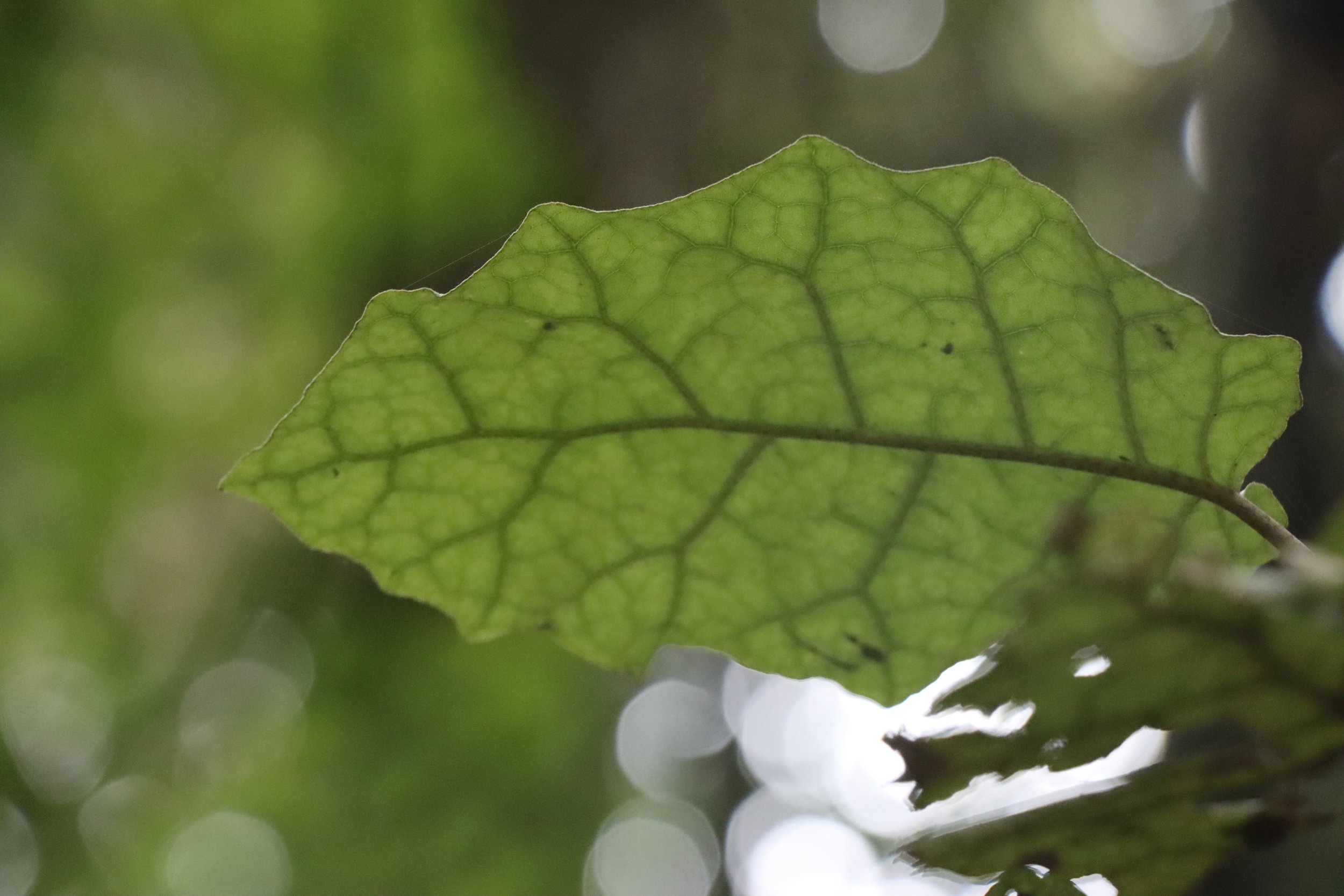
This is rangiora, beautiful leaf veins that are gorgeous with backlight. When photographing, I’m doing many things at once! Whoever said to do one thing at a time, this is the exception for me! As soon as camera goes up to my eye, I’ve either seen the photo already (most times) or I’m scanning through my lens. So I’m composing, looking at what is in the image, ensuring my light is right (most of the time I’m on manual), feeling the balance of the photo and then I take the photo. Later, I may go back in and crop into an area I love. Within one photo I can perhaps see 2-3 images. Or just one. It all depends. But light is so important and focus is more often than not, in focus in parts and out of focus in other parts. I love this part of composing images. There is magic in creating layers.
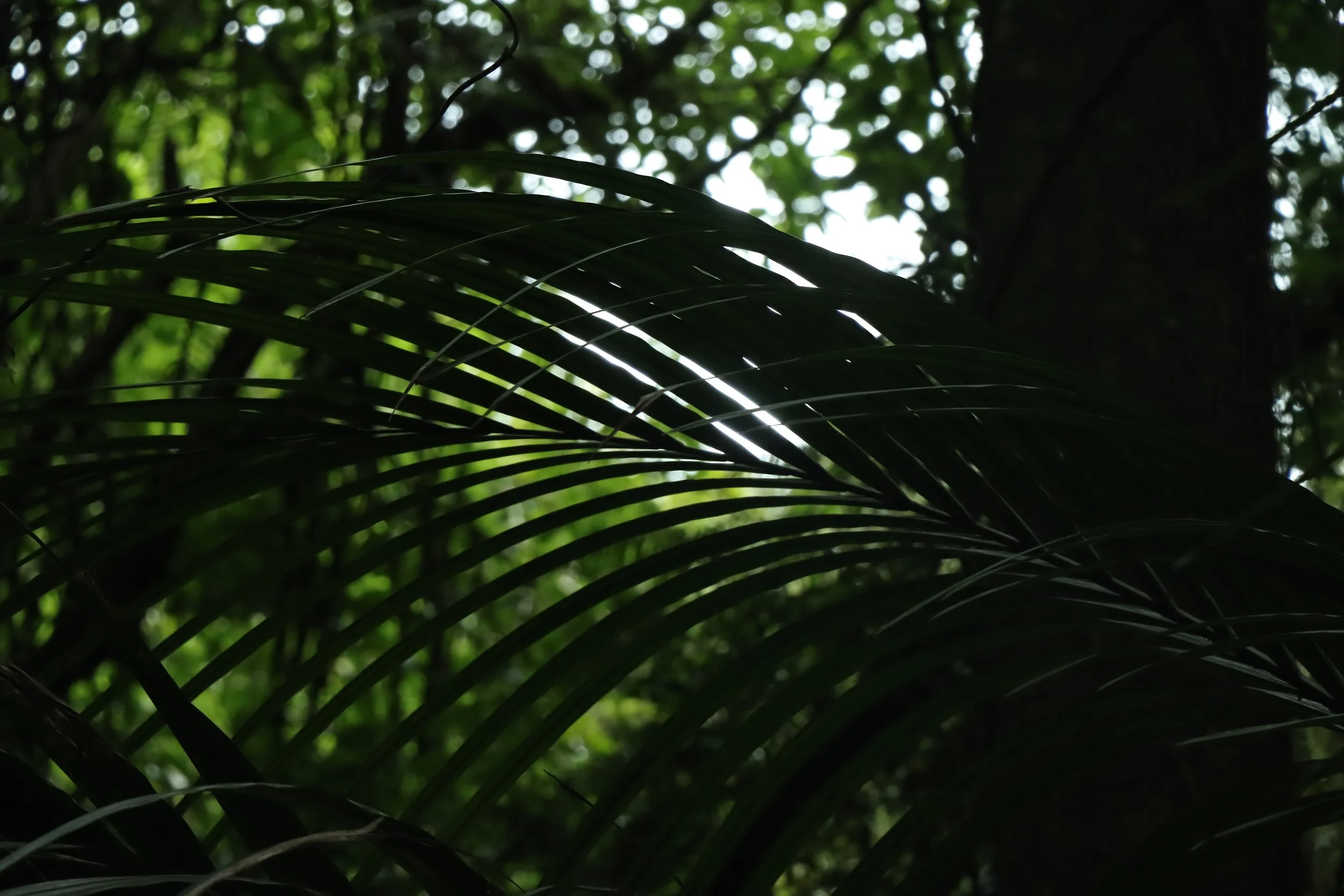
Nīkau does this beautiful thing in the ngahere, its long leaves with inner leaves I call them, reach out and overlap creating patterns upon patterns when it crosses over itself but also interacts with other native trees. I’ve photographed this rākau often and captured some stunning images like this. Again, layers of light and rākau communicating and crossing over each other.
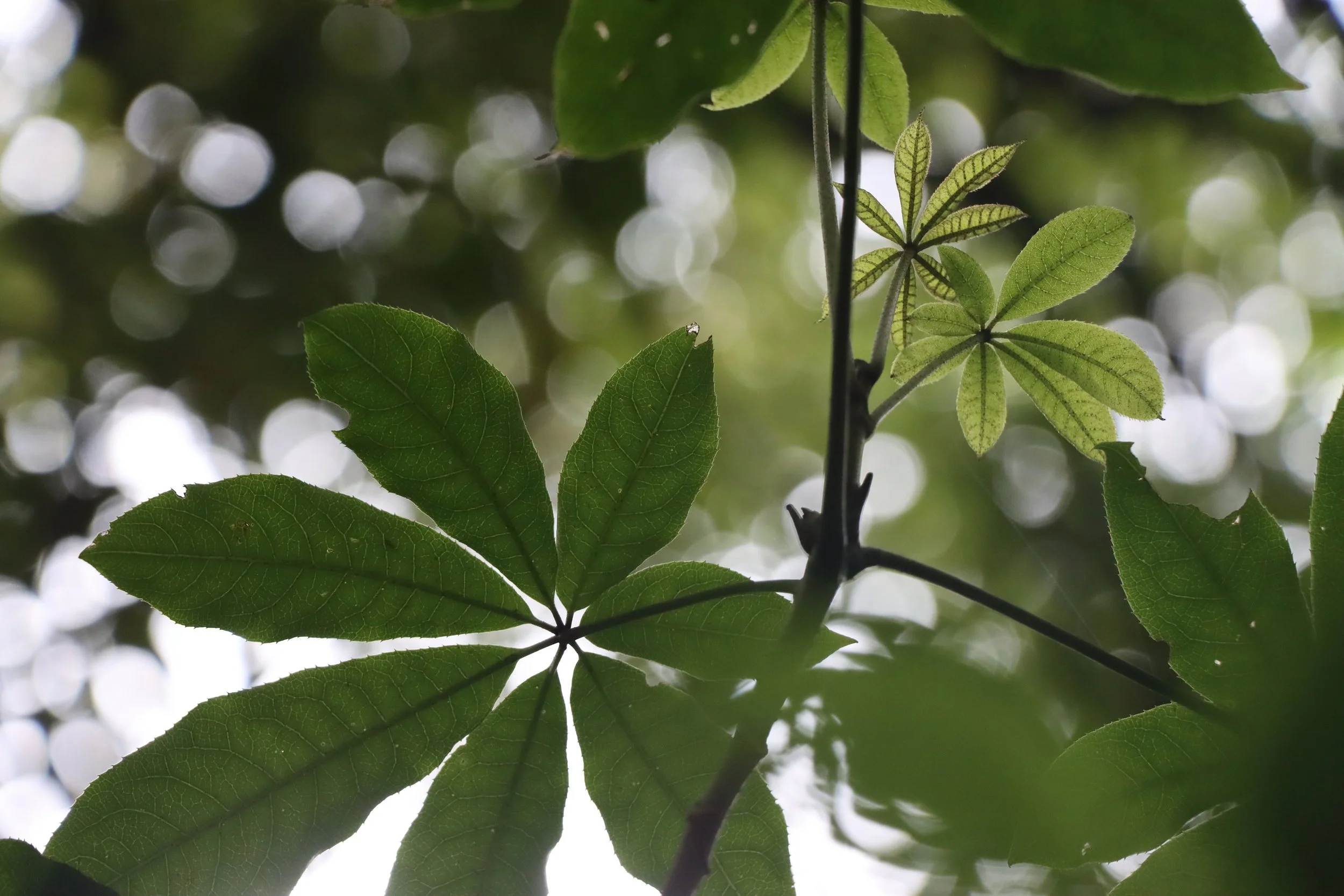
Whauwhaupaku. One of my fave rākau. I grew it in my garden from seed which taught me so much and I’ve experienced it often in many ngahere around the country from top to bottom. The leaf shape is exquisite and this particular rākau has old and new growth which also brings contrasting colours and size. And the background out of focus creating these orbs of light and magic are sprinkled through the background. There’s a lot going on in this image and all captured in a second!
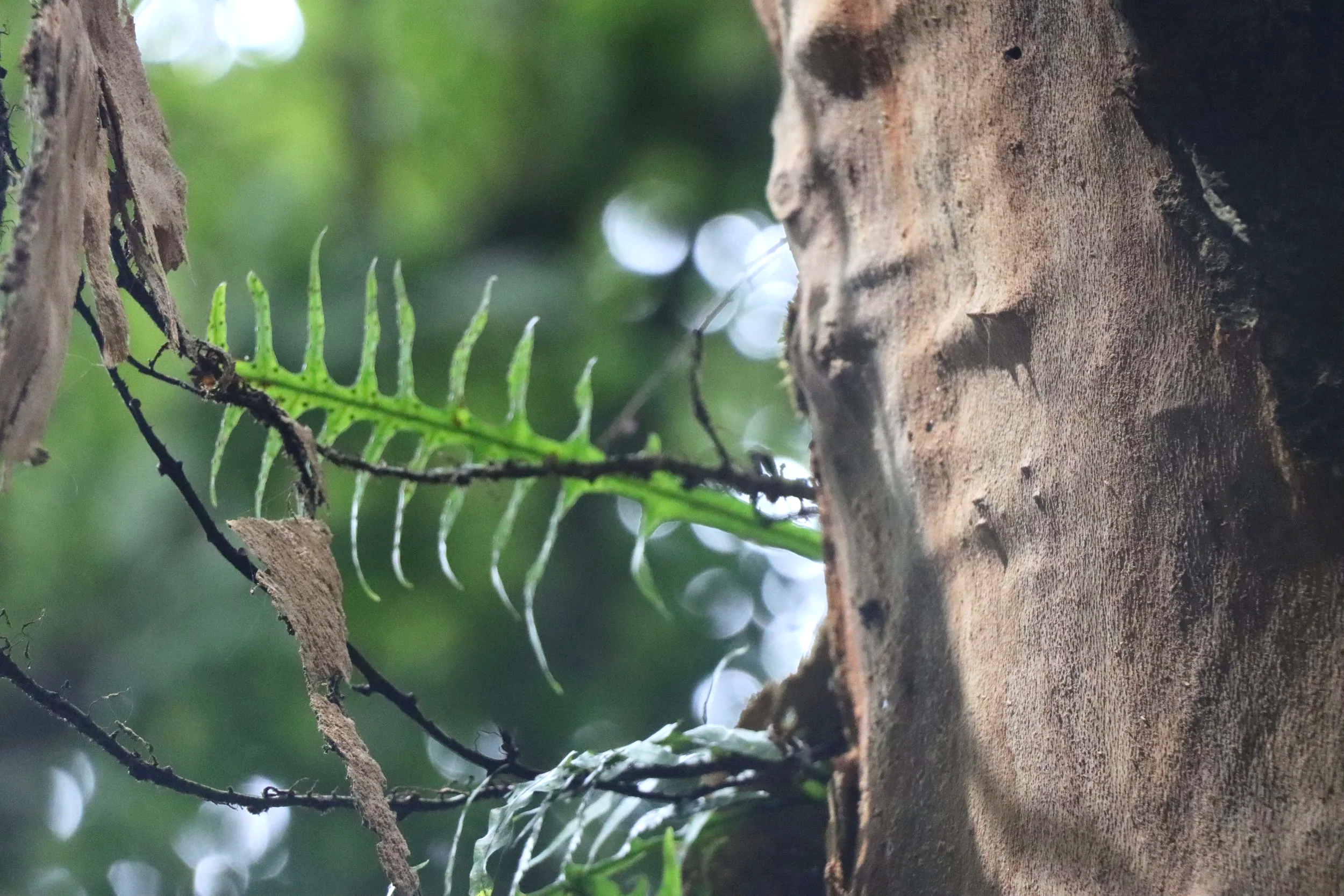
I’m never after perfection when creating an image. I’m after a feeling which brings all subjects of the image together, relating to each other, in harmony. Having a conversation with each other! Again, there are many layers of rākau here and many layers of composition and capturing them all at once in a few seconds of composing - composition, colour, light, patterns, in focus, out of focus, texture. And after a while, you learn to trust the process. And while digital allows you to check your photos and go back and see what you’ve created. I rarely look when I’m out photographing. I remember what I’ve photographed but its not until I offload them to my computer that I see the magic that has been created.
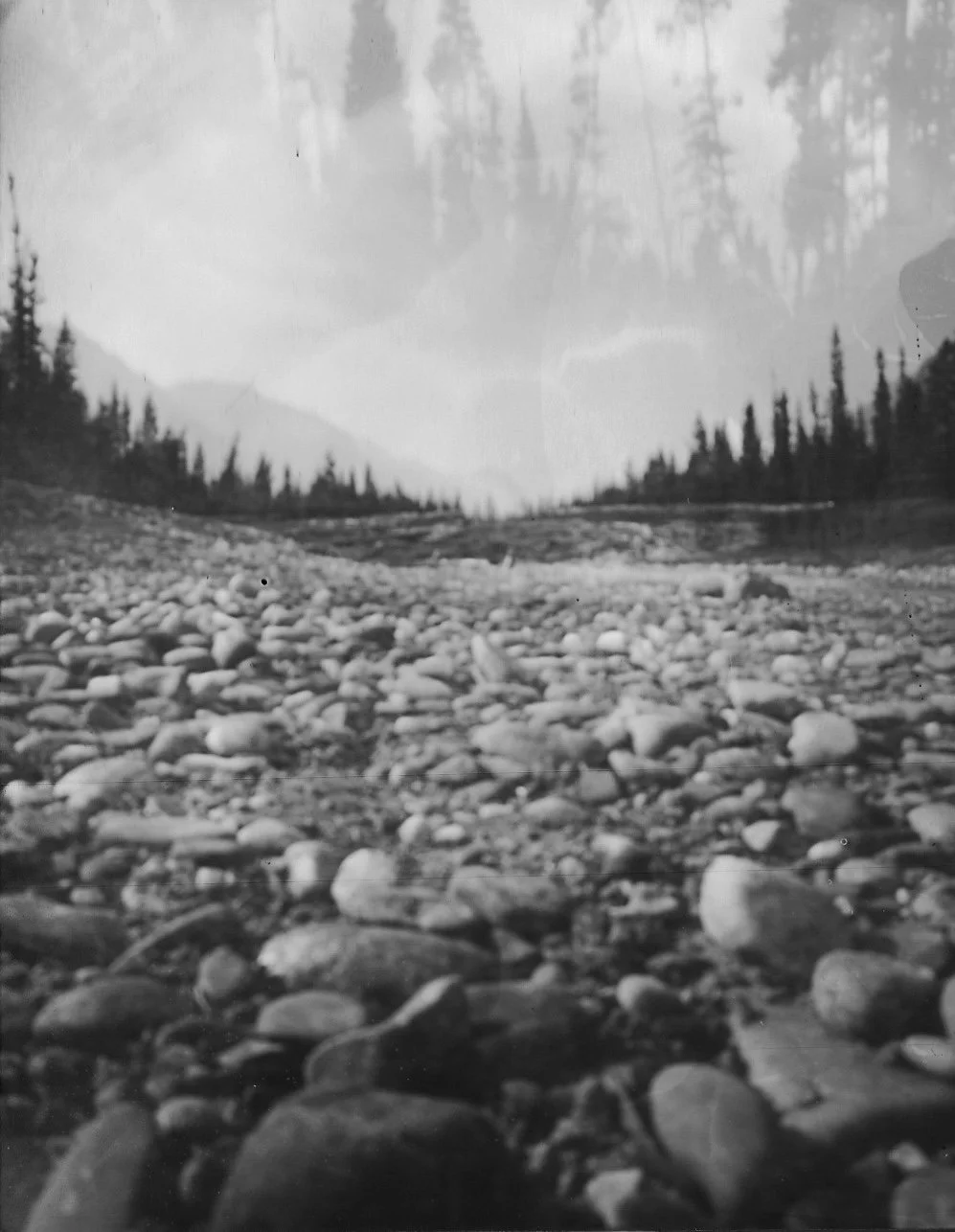
I thought I would pop this one here because I love it so much and it has been created with my pinhole camera while I was in Banff, Canada 2025. Photography doesn’t have to be complicated and you can make a box with a pinhole, get you some light sensitive paper and you have the ability to capture light and images. What I love about pinhole photography is that light exposure and composition are your biggest focus. There is no in focus out of focus, everything is on one plane, so the other variables become more important. You can also expose many times which I’ve done where which is part calculation and part trusting the process and what I’m seeing and composing. The pinhole camera captured this landscape well, as I experienced it and that is what I’m always after.